




















Guide: How to prevent and treat mud fever in horses
|
|
Time to read 5 min
|
|
Time to read 5 min
Mud fever is one of the most frustrating skin conditions a horse owner can encounter during the wet autumn and winter months. When mud, moisture, and bacteria combine, even the best‑groomed horse can suddenly develop irritated, crusty legs.
The good news is that with the right knowledge, a good care routine, and the right care products, you can both prevent and treat mud fever.
In this guide, you’ll get a complete overview of how to recognize the signs of mud fever, how to clear it up, and which products are effective for treatment and prevention.
Mud fever in horses is a skin infection that mainly affects the pastern region and the lower part of the horse’s legs. It resembles dermatitis and typically presents as sores, scabs, and irritated skin in the moist areas around the pastern.
Mud fever almost always develops due to a combination of moisture, skin irritation, and microorganisms. It’s these factors together that break down the skin’s natural barrier and allow bacteria and fungi to take hold.
Quick action is crucial when you spot the first signs of mud fever — left untreated, it can progress into deeper infections and chronic swelling.
Recognizing the early signs of mud fever is key to fast and effective treatment. Many horse owners only notice the problem once it’s advanced, but with daily checks you can catch it early.
Typical signs to watch for include:
The most reliable early sign of mud fever is often small, hard scabs in the skin folds around the pasterns. You typically discover them when brushing or washing your horse’s legs after a muddy turnout. These scabs may look harmless at first, but they indicate that bacteria are already active.
Mud fever is caused by a mix of bacteria, fungi, and persistent skin irritation.
The most common organisms include Staphylococcus species and the skin bacterium Dermatophilus congolensis, which thrive in damp environments.
Mud fever is especially common from October through March, when moisture, mud, and wet paddocks create ideal conditions for infection.
Prolonged wet legs are one of the biggest risk factors. When a horse stands for hours in muddy turnout, wet winter pastures, or damp areas without a chance to dry off, the skin weakens and becomes prone to infection. Constant moisture creates a perfect environment for microorganisms to flourish.
Even tiny nicks and abrasions can play a role — minimal damage is enough to let an infection start under the right conditions.
Horses with white legs or heavy feathering are often more susceptible, as the skin is more sensitive and moisture gets trapped under the long hair.
Stable hygiene also matters. Dirty, wet bedding that isn’t changed regularly creates a damp environment even when the horse is inside.
Lastly, a weakened immune system, previous skin conditions, and repeated episodes of mud fever make a horse more predisposed to future outbreaks.
Effective treatment for mud fever in horses focuses on three things: local skin care, improving the environment, and, in severe cases, veterinary intervention.
Before you begin, assess the severity of the mud fever. Mild cases can often be managed at home with daily care. For moderate to severe cases, consult your veterinarian.
Here’s how to tackle mud fever step by step:
Clean the legs
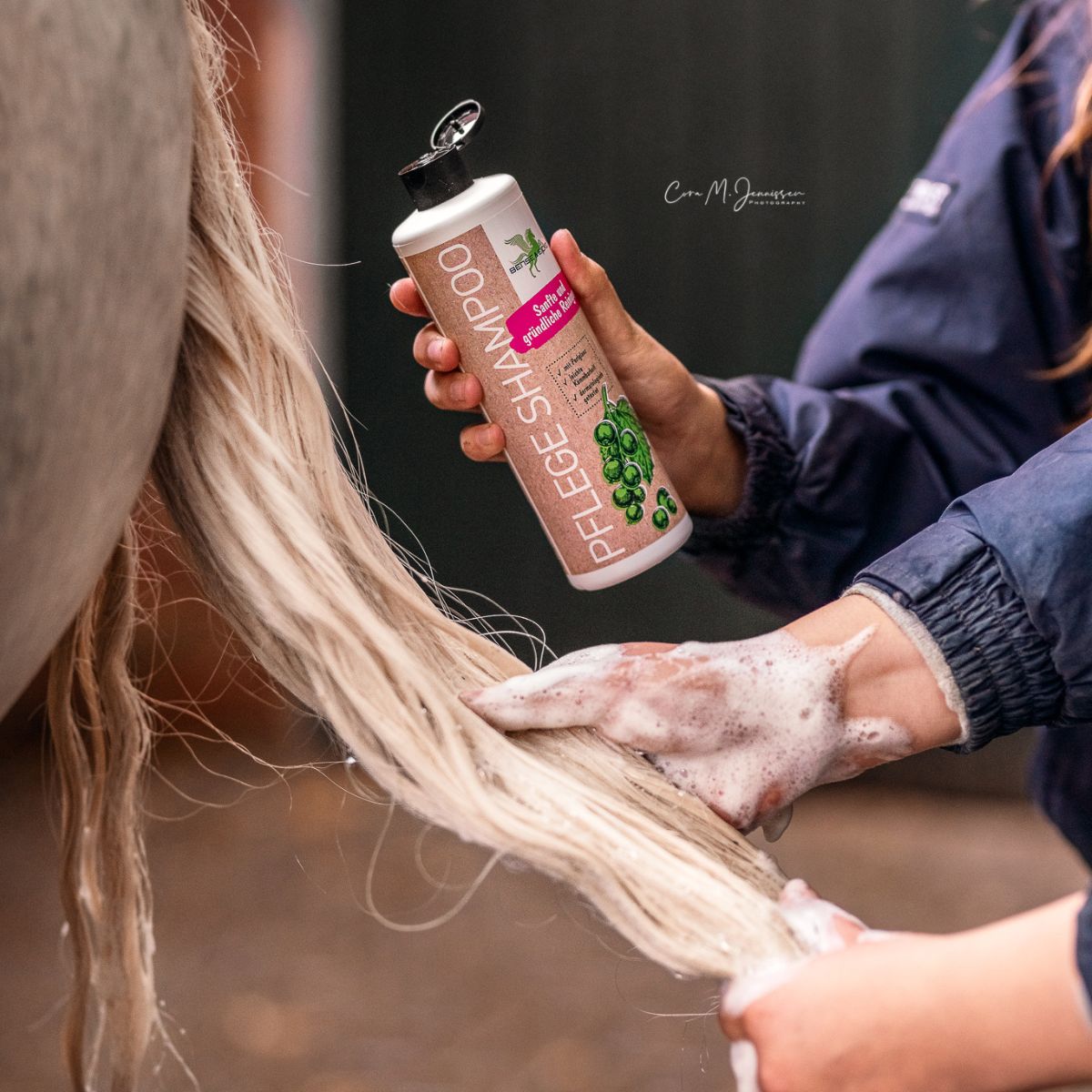
Wash your horse’s legs gently with a mild horse shampoo (such as Bense & Eicke horse shampoo) to remove dirt, pus, and loose scabs. Use lukewarm water and rinse thoroughly.
Dry thoroughly
Pat the legs dry with a clean, absorbent towel. Dab gently rather than rubbing to avoid further irritation.
Apply treatment
Once the skin is completely dry, apply a targeted treatment like Maukosan spray directly to the affected areas.
Protect the area
Let the spray dry, then apply a thin layer of a protective barrier such as milky fat cream around the affected area to shield it from moisture and friction.
Repeat this routine once daily, or more often if your vet advises, until the skin looks calm and free of new scabs.
Do not forcefully remove hard, painful scabs. Loosen them gradually over several washes, preferably with veterinary guidance. Patience is crucial — pulling scabs can worsen the infection and create new wounds.
Your vet may perform skin scrapings, biopsies, or cultures to pinpoint the exact cause and adjust treatment. In severe cases, they might prescribe antibiotics, zinc ointment, or anti‑inflammatory medication, especially if there’s deeper infection or lymphangitis (inflammation of the lymph vessels).
Contact your vet if:
The horse is markedly lame and unwilling to bear weight
Fever, loss of appetite, or lethargy occurs alongside mud fever
Wounds discharge heavily or have a foul odor despite daily care
There’s no improvement after 5-7 days of proper treatment
Although mild cases of mud fever are often manageable at home with consistent care, it’s important to know when professional help is needed.
Preventing mud fever is easier and much kinder to your horse than dealing with a full‑blown outbreak.
Key prevention steps include:
Keep the stable dry and well‑bedded: Remove wet bedding daily, especially in winter, and replace it with fresh, dry material. A dry stall helps the horse dry off after turnout.
Avoid prolonged time in deep mud: Rotate paddocks, install drainage, or lay gravel in high‑traffic, wet areas around gates and feeding spots.
Wash legs after muddy turnout: Use a mild horse shampoo to remove dirt and always dry legs very thoroughly afterward — moisture is a horse’s worst enemy.
Maintain practical feathering length: Trim feathering so the skin can be kept clean and dry. Long hair traps moisture and mud.
Use barrier creams preventively: Apply barrier cream to clean, dry skin before the horse goes out on wet ground to help repel moisture and dirt.
Check legs daily: Look for small cuts, fissures, and irritation so early signs can be caught before full mud fever develops. Know what your horse’s legs normally look like when healthy.
Consider extra dry turnout periods: In especially wet weather, stabling or dry turnout can help when the horse is otherwise outside a lot.
Horses with a history of mud fever generally need extra preventative care — even one muddy weekend can trigger a new episode if routines slip.
Mud fever doesn’t behave like classic contagious diseases such as ringworm. You generally cannot infect one horse by letting it stand with another that has mud fever. Still, good hygiene and not sharing brushes, leg wraps, and other equipment between horses is recommended to avoid spreading bacteria.
It depends on intensity. With mild mud fever that isn’t painful or causing lameness, light riding on dry, level ground is often fine. But if the horse shows pain, lameness, or clear discomfort, stop riding and contact your vet.
Expect 1-3 weeks for mild cases if treatment starts early and is consistent. Severe infections involving lymphangitis or deeper tissues may take several weeks to months.
Unfortunately, yes — mud fever tends to recur if underlying causes aren’t addressed. If horses remain in the same muddy fields or wet stables, the problem often returns each winter. That’s why prevention is as important as treatment.
For daily care and mud fever treatment, a mild horse shampoo (like Bense & Eicke) is recommended for gentle cleaning, a targeted antimicrobial spray (like Maukosan) for treating the affected skin, and a protective cream for barrier protection and moisture defense.